********* This is a Legacy Site I keep for posterity. Here is my new site. *********
| Home | Interests | Work | Art | Contact | Jump |  |

"Lines Composed A Few Miles Above the Center for Really Neat Research..."
The Banyan Tree Community School
A Community School for Life
Jeff Sale and Jodi Reed
Parents, educators, and leaders:
A group of us are interested in building a community and school outside of San Diego. Home schooling sounds appealing, but we think a community school would be ideal, not just for the kids, but also for the adults who would otherwise live somewhat isolated, fragmented lives. We think a co-housing arrangement would be a lot of fun as well as a practical way to share resources. Think about how rich our children's lives would be in an eclectic environment supported by caring, creative adults who like to think and talk.
What's co-housing?
If you're not familiar with Co-op housing, it works like this: Each family unit (or individual) owns its own dwelling. This can be either an unattached house or a condo. A centrally located building holds a large kitchen, dining hall, and living/entertainment area. Cooking duties are shared by Co-op members on a rotational basis. Members of the Co-op housing group can also arrange for child-care and home schooling options with other members. Co-op housing members are able to pool their resources to create mega-workshops, computer LAN systems, or whatever they desire. Co-housing offers a genuine feel of community at an affordable price, and is a logical arrangement for a group of like-minded individuals looking for a change. It is very popular in Denmark, and has enjoyed some success in communities in the United States.
Preliminary Designs of the Banyan Tree Community and
School
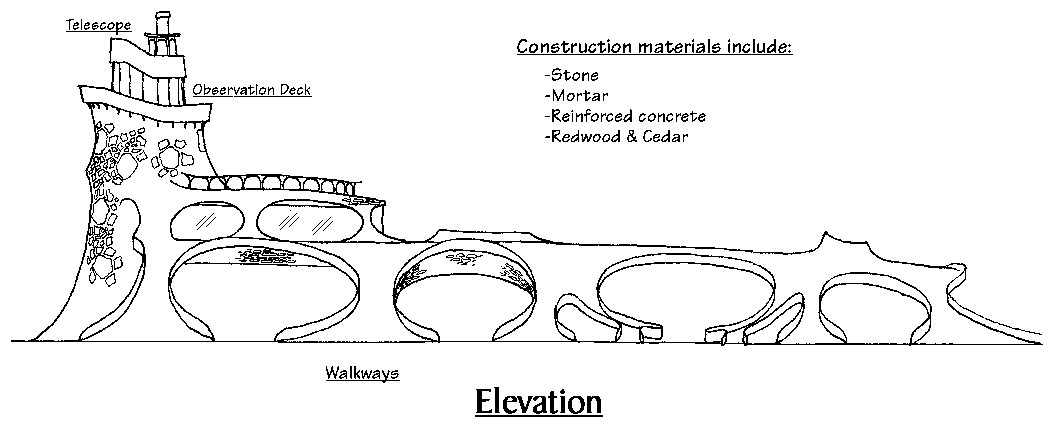
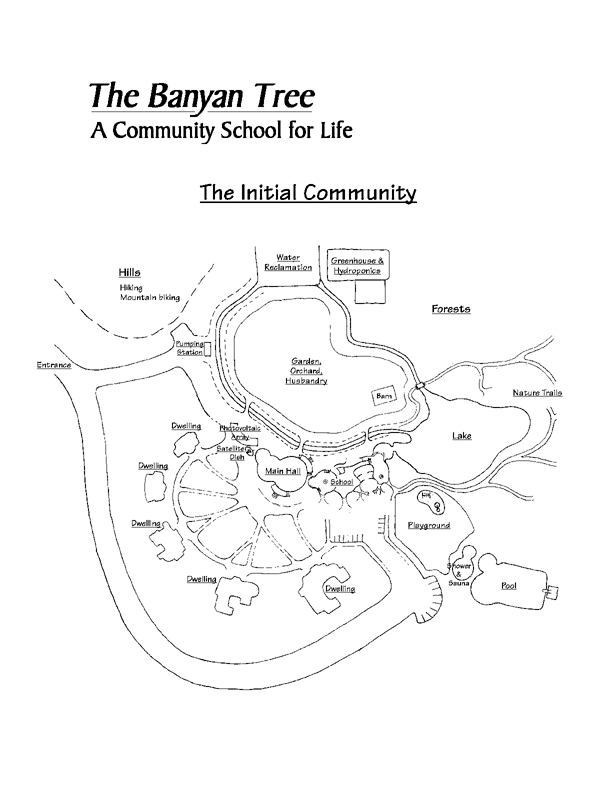
Since we did these drawings, our vision has changed somewhat, so stay tuned for future modifications of the design. Regardless, this design was inspired in part by the architecture of James Hubbell, who is a talented and creative architect living in Julian, CA, a small town in the mountains east of San Diego.
-
Elevation of The Banyan Tree School
-
Floor Plan of The Banyan Tree School
-
Aerial View of The Banyan Tree Community
Elevation of The Banyan Tree School
Floor Plan of The Banyan Tree School

Banyan Tree Community Plan
We're thinking of pooling our resources to
create:
* a community school
* a community garden (for health, beauty, the
peace of growing, and learning opportunity for the kids)
* a truly awesome library
* guest rooms in the shared house
* a computer network linked to the Internet
* a fireplace (perfect for after-dinner
discussions)
* a hot tub (& pool & sauna?) (perfect
for after-dinner discussions)
* an adults-only tree-house & a kids-only
tree house
* a central courtyard
* a water-reclamation system
* works of art
We're interested in preserving privacy, but we want plenty of opportunity for informal discussions, shared dinners, and other community-based activities. A "community association" financial arrangement makes sense. We would each own our private land plots and would contribute a flat fee or percentage of income to the shared grounds. Only those involved in the school would have to support it, and hopefully we could eventually bring in a small income from school activities & tuition. We've got a lot of diversity in our group and may be able to create income options that support the community, both financially and spiritually.
Where will this be?
We'd like to find a rural area North or East of San Diego (Escondido, San Marcos, El Cajon). We want nearby hiking, employment, & universities. We want to be close enough to San Diego for people to easily commute to jobs, but far enough out to feel isolated from the big city.
What will the school be like?
We envision a small school (for our own kids at the beginning) based on home schooling principles (parental involvement, project oriented). Our working name at this point is The Banyan Tree. The branches of a Banyan tree send out shoots that root to form secondary trunks: a fitting symbol at many levels.
We're considering:
* lots of play and hands-on activities for
the little kids
* parental involvement (critical!)
* regular story time (parents and older kids can
read or tell stories)
* lots of books
* hikes & climbing
* gardening (kids plan and maintain their own
plots)
* computers! (lego-logo programming, desktop
publishing, Internet pen-pals, mathematics, interactive instruction,
Meme, AVS, etc.)
* projects (design & build a tree house, for
example)
* community service (trail maintenance, creek
clean-ups, etc.)
* kid-centered (adults are "coaches")
* music, sing-alongs
* chores, responsibility
* games
* writing letters, stories, books, etc.
* painting, crafts (fun with pop sickle sticks!)
* puppies, kittens, goats, chickens (of course
the kids take care of them)
* observatory
* pond ecosystem
* general systems thinking
* shop (woodworking, rocket-building, etc.)
* science lab (microscope, chemistry sets,
spectacular demos/"magic" shows)
* field trips (Wildlife Park, Ruben H. Fleet,
Sea World, museums, ocean, etc..)
* community business?
* values/spirituality (taught primarily by
stories)
* regular quiet time/meditation/prayer
Getting Started
We're currently in the early stages: getting to know each other, discussing the possibilities & looking for land.
Why are we telling you this?
We're interested in the experiences and wisdom of others, and we're also hoping to promote creative living. Since we began discussing this, many of us have experienced a surge in energy. Our increased inspiration was born of our sense of dissatisfaction with modern life; perhaps you can also find creative solutions to your problems.
Thought for the Day:
Dare to be naive. - Buckminster Fuller
Copyright © 2015, Jeff Sale. (statement)